Engineering decisions
Requirements, architecture, CAD, CAE, DFMEA, prototypes, and validation evidence.
Concept to customer · 15 practical chapters
A structured engineering guide to vehicle planning, design, validation, homologation, production readiness, conformity, and continuous improvement.
The complete development journey
Each chapter combines practical explanation, activities, deliverables, gate evidence, a process infographic, FAQs, and links to the adjacent development phase.
See the complete concept-to-customer development system.
Define customer need, business viability, and product direction.
Create, compare, and select feasible vehicle concepts.
Define the package, systems, domains, and interfaces.
Release robust design data using CAD, CAE, and DFMEA.
Build and integrate vehicles for learning and verification.
Prove design intent and real-world customer performance.
Demonstrate regulatory compliance and obtain type approval.
Prepare processes, tooling, suppliers, controls, and people.
Validate the production system before serial release.
Launch serial production with controlled ramp-up.
Sustain quality, delivery, cost, safety, and productivity.
Maintain conformity with the approved vehicle type.
Turn field, warranty, dealer, and customer data into action.
Connect every phase around quality and customer satisfaction.
One system, many disciplines
Follow gates, deliverables, cross-functional responsibilities, quality controls, and customer outcomes across the complete automotive lifecycle.
Read the process overview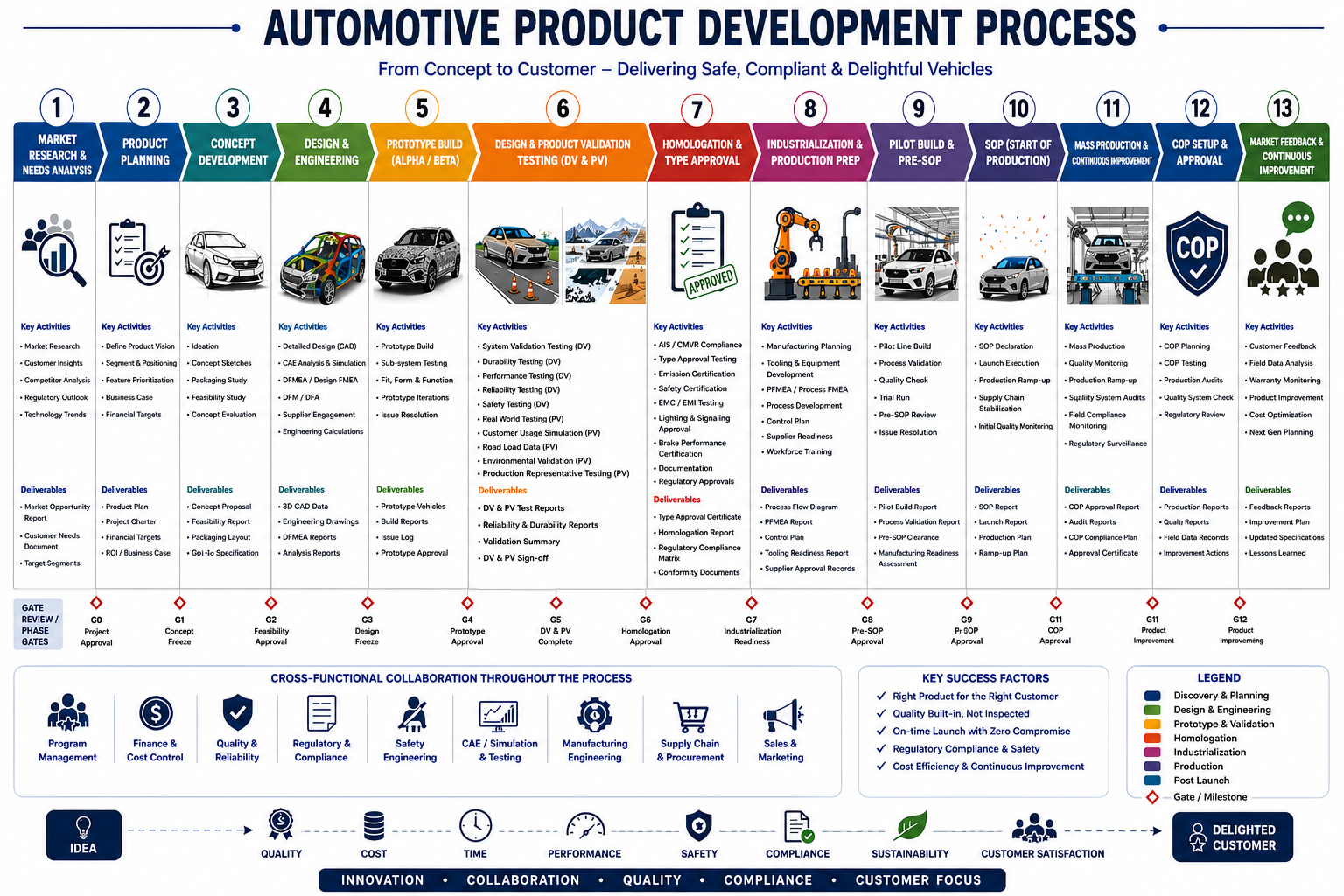
Engineering Deep Dives
Go beyond the lifecycle overview with focused guidance on standards, methods, evidence, and vehicle-level application.
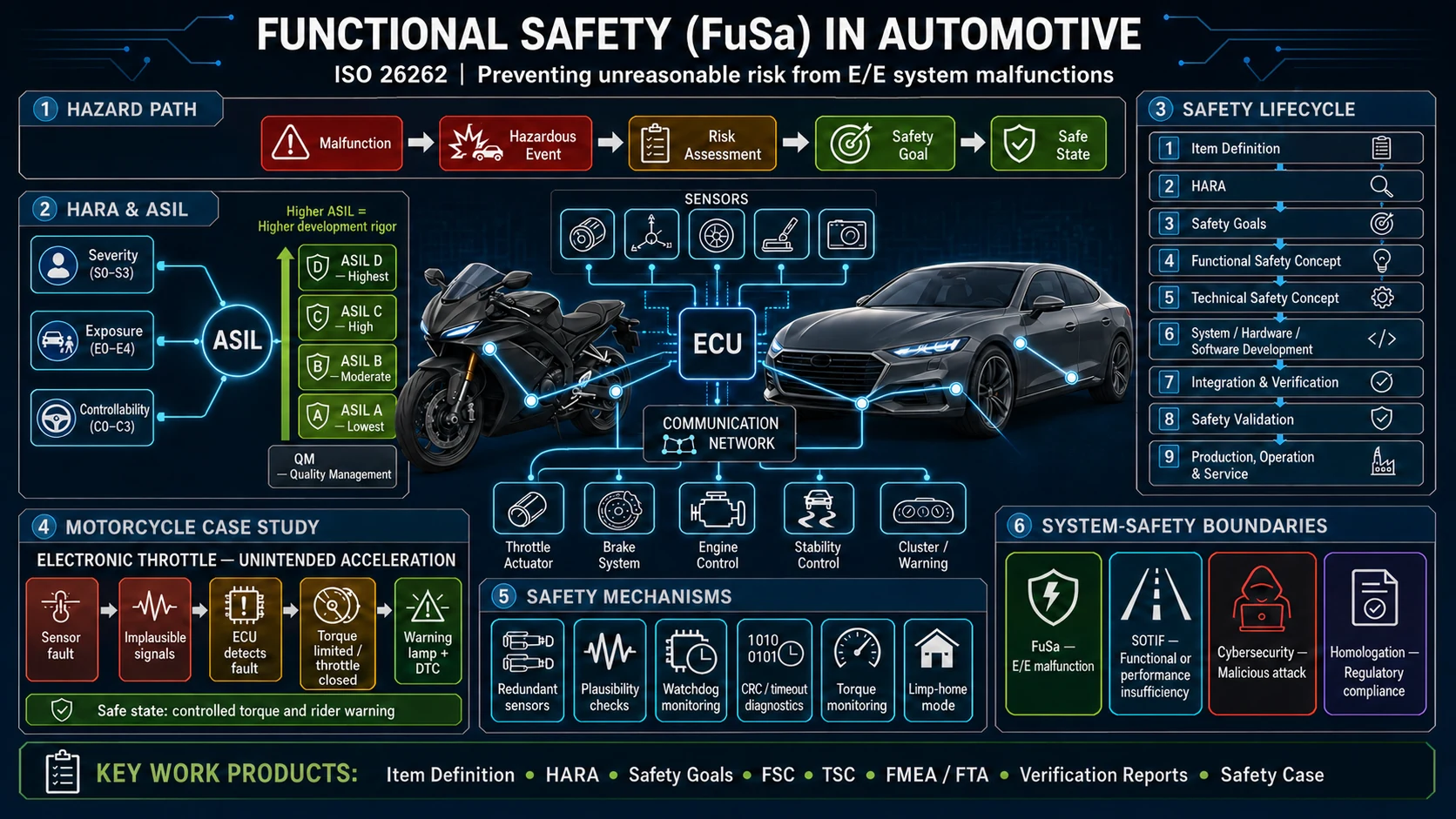
Connect hazards, safety goals, FSC and TSC requirements, safety mechanisms, validation evidence, and the complete vehicle safety lifecycle.
Read Article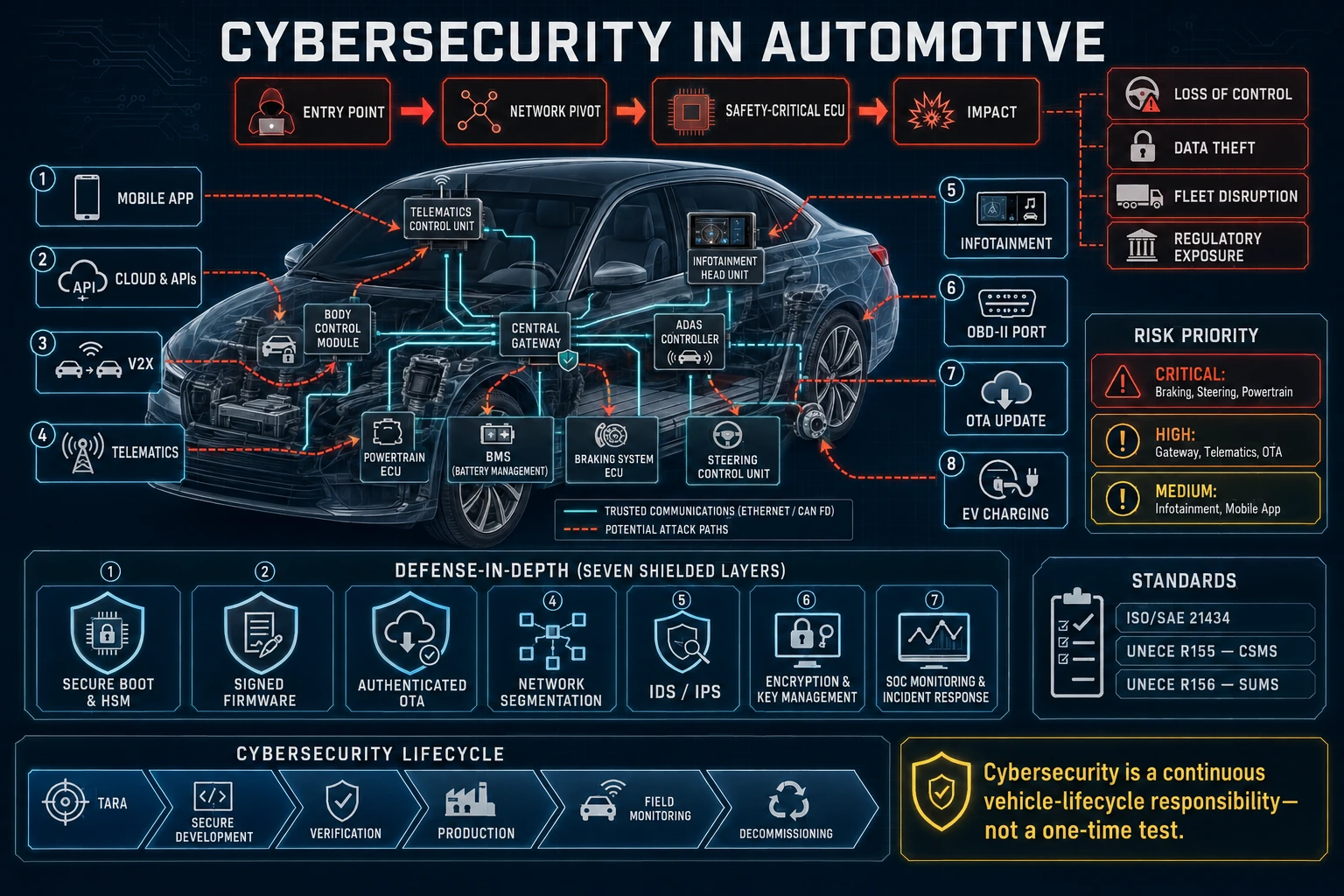
A practical automotive cybersecurity study covering vehicle attack surfaces, TARA, defence-in-depth, ISO/SAE 21434, UN R155/R156, secure software updates, motorcycle risks and OEM compliance readiness.
Read ArticleAutomotive Regulation Updates
Track published and draft requirements with structured OEM, supplier, testing and homologation impact.
Confirmed draft. Covers L, M and N categories. From 1-Oct-2027, vehicles fitted with V2V must comply with AIS-230. From 1-Oct-2028, V2V fitment becomes mandatory if final rule remains unchanged.
The DoT exemption applies specifically to 5875–5905 MHz. AIS-230 public explanation may separately refer to 5.875–5.925 GHz for V2V / C-V2X OBU context.
Confirmed. New models 1-Oct-2026 and existing models 1-Oct-2027 as applicable.
Confirmed final. Applies from 1-Apr-2027 as per published amendment.
Plan annual COP frequency and renewal readiness while maintaining ongoing whole-vehicle safety conformity controls.
Built for working knowledge
Written for engineers, students, suppliers, quality teams, manufacturing professionals, validation teams, and regulatory practitioners.
Requirements, architecture, CAD, CAE, DFMEA, prototypes, and validation evidence.
Homologation, type approval, technical files, COP, WVSCoP, and controlled changes.
Industrialization, tooling, PFMEA, control plans, pilot builds, SOP, and ramp-up.
Voice of customer, market feedback, warranty learning, field quality, and continuous improvement.
Start with the lifecycle, then go deep where your role demands it.