AutoPDP technical studies
Engineering Deep Dives
Explore the technologies reshaping modern vehicle architecture, safety and connected mobility.
Knowledge collection
Technical articles
5 detailed studies connecting vehicle-level risk, practical engineering work and compliance evidence.
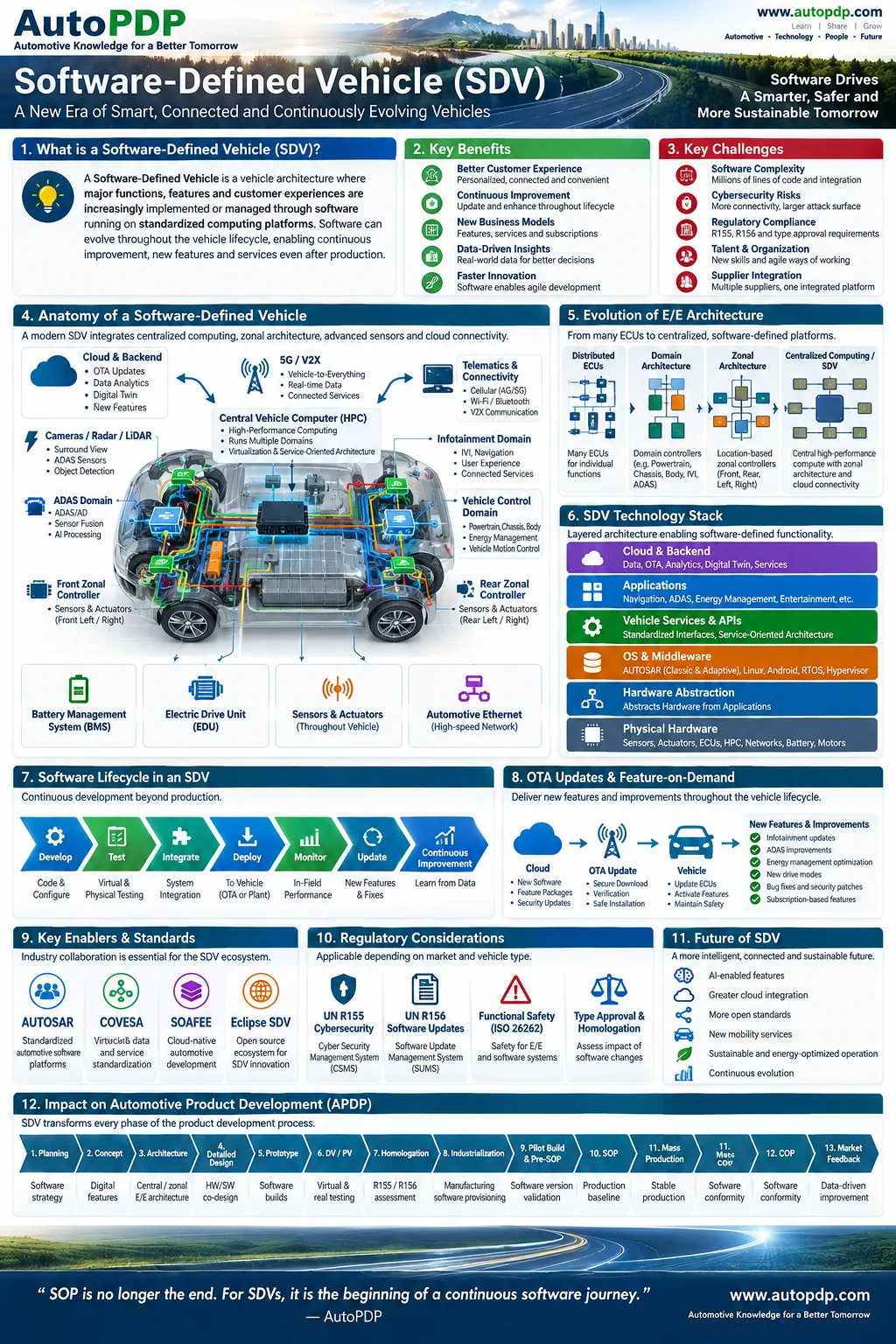
Software-Defined Vehicle (SDV)
Software-centric vehicle architecture, zonal computing, vehicle OS, APIs, OTA, cloud and lifecycle software evolution.
Read Article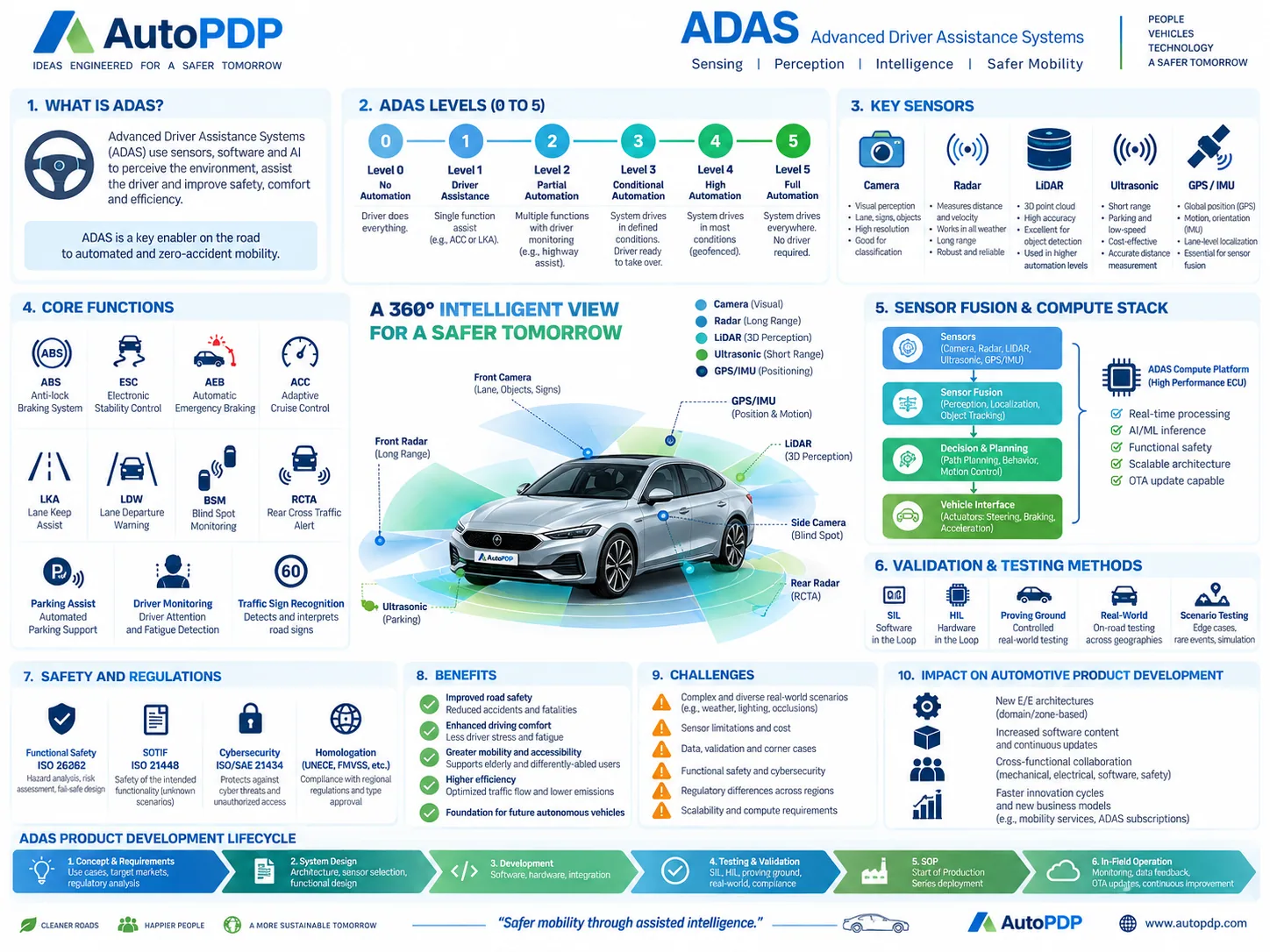
Advanced Driver Assistance Systems (ADAS)
Sensors, perception, sensor fusion, driver-assistance functions, safety engineering, validation and intelligent mobility.
Read Article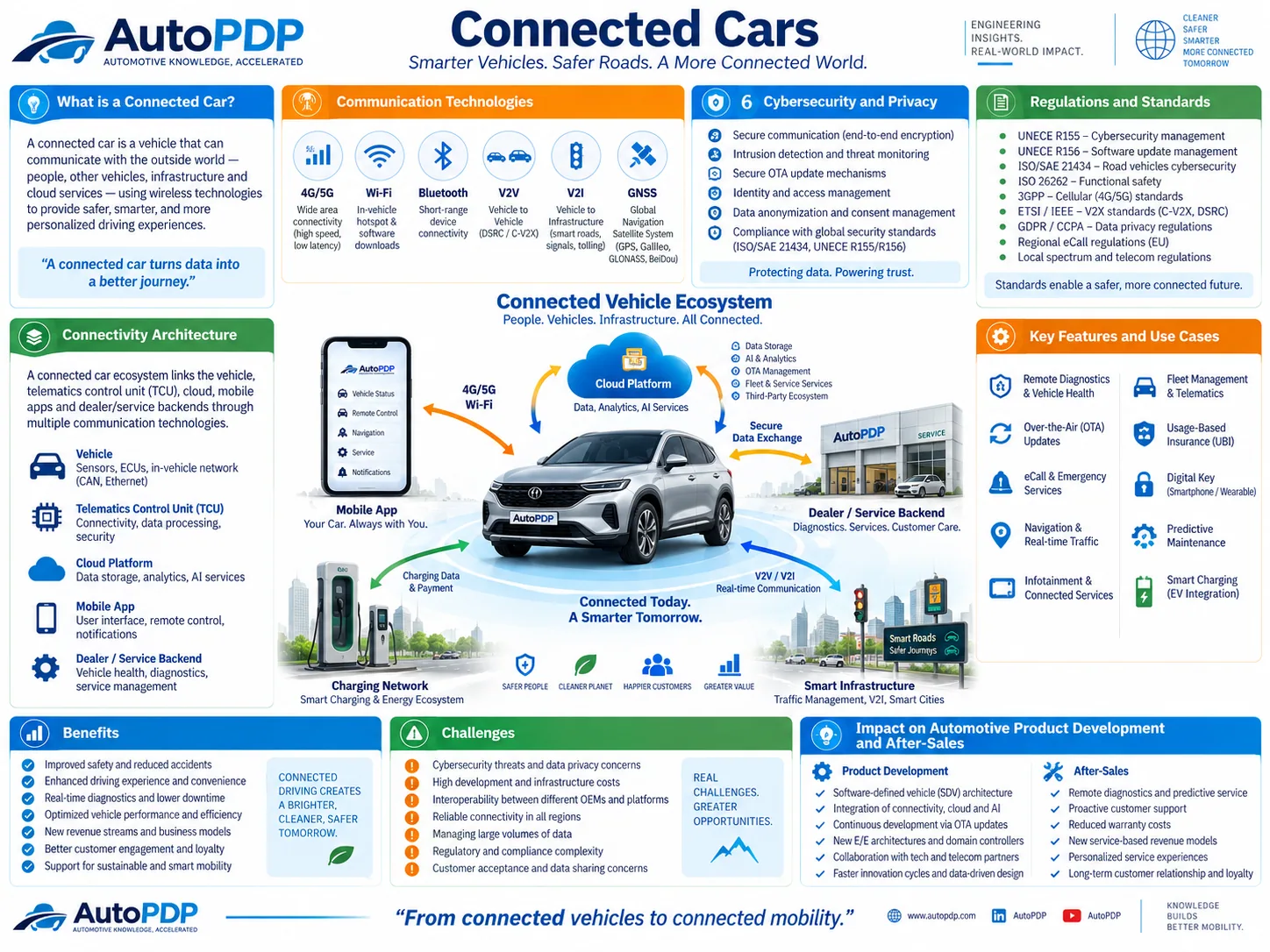
Connected Cars
Telematics, cloud connectivity, V2X, remote diagnostics, OTA, cybersecurity and connected mobility services.
Read Article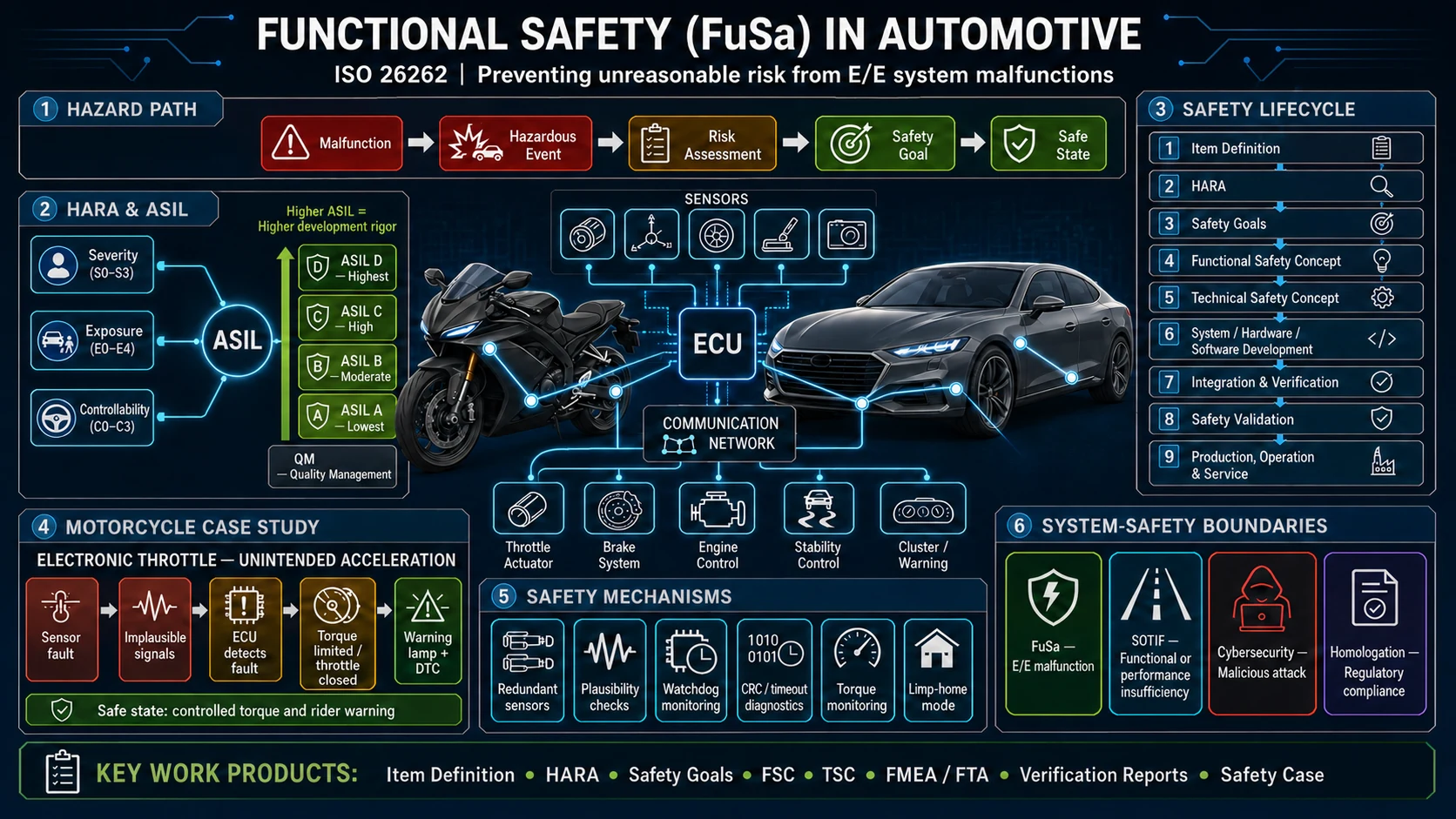
Functional Safety (FuSa) in Automotive
Connect hazards, safety goals, FSC and TSC requirements, safety mechanisms, validation evidence, and the complete vehicle safety lifecycle.
Read Article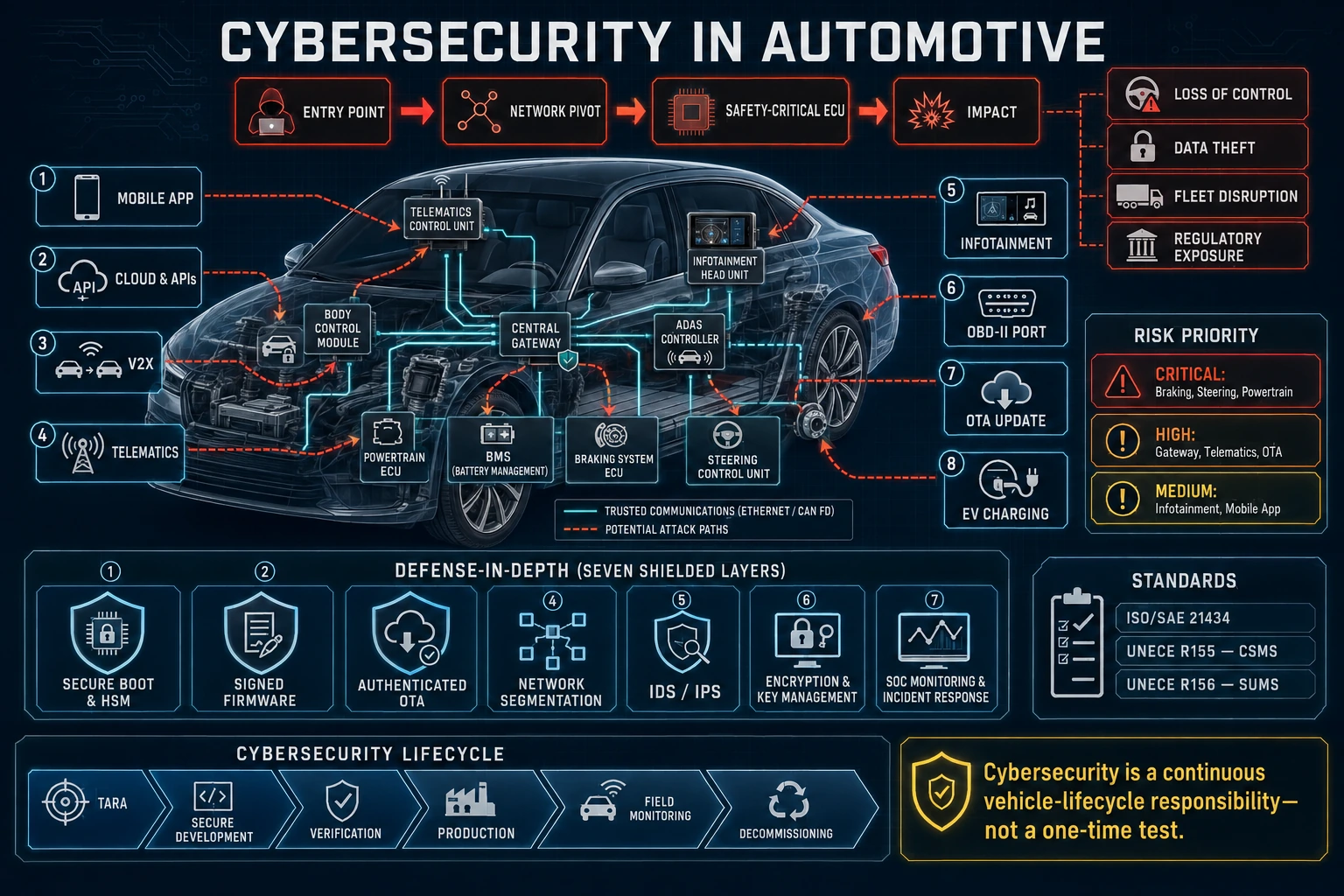
Automotive Cybersecurity: From Attack Surface to Type Approval Readiness
A practical automotive cybersecurity study covering vehicle attack surfaces, TARA, defence-in-depth, ISO/SAE 21434, UN R155/R156, secure software updates, motorcycle risks and OEM compliance readiness.
Read ArticleChoose a starting point
Build a learning path around the decision in front of you
Each study can stand alone, but the strongest working view connects architecture, risk and evidence. Use the matrix to select an entry point, name the output you need and continue into the adjacent discipline before a program decision is closed.
| Study | Roles | Useful prerequisites | Working output | Next steps |
|---|---|---|---|---|
| Connected Cars | Telematics, E/E architecture, cloud, service and cybersecurity teams | Connected use cases, external interfaces and vehicle-to-cloud data paths | A boundary map linking services, interfaces, data and operational responsibilities | Software-Defined VehicleCybersecurity |
| Software-Defined Vehicle | System and software architects, platform, integration and change teams | Function allocation, compute and network baseline, and update needs | A dependency view across compute, platforms, APIs, OTA and lifecycle change | Connected CarsCybersecurity |
| ADAS | ADAS system, sensing, validation and functional-safety teams | Target functions, sensor assumptions and validation scope | A trace from driver-support function through sensing and validation evidence | Functional SafetyDV and PV testing |
| Functional Safety | Functional-safety, systems, hardware, software and validation teams | Item definition, system architecture and identified hazards | A review chain from HARA and safety goals to concepts, mechanisms and evidence | DV and PV testingHomologation |
| Automotive Cybersecurity | Product cybersecurity, software, cloud, E/E and homologation teams | Assets, interfaces, trust boundaries and lifecycle responsibilities | TARA, control and evidence questions tied to the vehicle and its connected services | Software-Defined VehicleHomologation |
How the disciplines connect
One vehicle platform, five connected engineering views
Connected-vehicle services create data and remote interfaces. Software-Defined Vehicle architecture makes functions and updates more flexible. ADAS turns sensor information into driver-support decisions. Functional Safety manages unreasonable risk from E/E malfunction, while cybersecurity manages risk from malicious access and compromised assets.
- Connected CarsVehicle, cloud, mobile and infrastructure interfaces
- Software-Defined VehicleCompute, platforms, APIs and lifecycle software
- ADASSensing, perception, decisions and driver interaction
- Functional SafetyHazards, safety goals and fault-control evidence
- CybersecurityThreats, controls, monitoring and incident response
Start with the discipline closest to your role, then follow its links into validation, homologation and production conformity.